
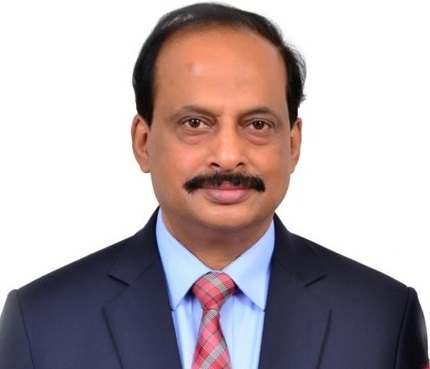
Prof. Manoranjan Parida,
Director,
CSIR-Central Road Research Institute,
Delhi – Mathura Road, PO CRRI,
New Delhi
Safety Assessment of High Speed Expressway Network Using Instrumented Vehicle
Abstract: Ensuring safety on high-speed expressways is crucial for reducing crashes and improving overall traffic management. Road safety literature consistently highlights human factors as the predominant contributors to road crashes, accounting for a significant proportion of incidents. Understanding driving behavior through advanced data collection techniques is vital for developing effective countermeasures. This study utilizes an instrumented vehicle equipped with LiDAR, cameras, GPS, and pedal force sensors to analyze real-world driving behavior over 8,100 km of expressway driving data. The instrumented approach allows for the extraction of micro-level traffic interactions and vehicle dynamics, facilitating a comprehensive safety assessment.
A key focus of this research is the assessment of driving behavior and safety evaluation under mixed traffic conditions on expressways. This research developed an extraction methodology for assessing surrounding information. The methodology involves the use of a single Light Detection and Ranging (LiDAR) sensor to detect, classify, and track surrounding vehicles in real time. The proposed approach integrates advanced computational techniques such as Density-Based Spatial Clustering of Applications with Noise (DBSCAN), Random Sample Consensus (RANSAC), and Kalman filtering to segment road boundaries, cluster objects, classify vehicle types, and track vehicle trajectories. The surrounding vehicles were categorized into three primary groups: two-wheelers, four-wheelers, and heavy vehicles. The developed classification and tracking model achieved an accuracy, precision, recall, and F1-score exceeding 94%, demonstrating its robustness across varied environmental and traffic scenarios.
The research further examines rear-end conflicts on expressways under different lighting conditions using naturalistic driving data. Safety evaluation was conducted by applying extreme value theory to identify critical risk factors associated with potential crash events. The analysis considers dynamic parameters such as vehicle headway, relative speed, and percentage overlap area to predict safety-critical events. Unlike previous fixed-length video-based data collection methods, the instrumented vehicle approach enables the collection of continuous and comprehensive driving data, allowing for more precise conflict identification. Additionally, the study explores the influence of driver socio-demographics and road environment factors, addressing gaps in prior research on expressway safety assessment.
Furthermore, this research developed a real-time lane departure warning system using a single LiDAR sensor, specifically designed to accommodate Indian driving conditions. This system functions as an Advanced Driver Assistance System (ADAS), operating effectively across various lighting conditions, patched road segments, and even road sections lacking clear lane markings.
The findings offer valuable insights for policymakers and traffic safety authorities in enforcing safer headway regulations based on different lighting conditions. By identifying high-risk scenarios and providing data-driven recommendations, this study contributes to the development of effective road safety interventions. Moreover, the research supports the advancement of Advanced Driver Assistance Systems (ADAS), enhancing driver awareness and mitigating potential crash risks. Ultimately, this study underscores the importance of instrumented vehicle approaches in enhancing expressway safety, promoting data-driven decision-making, and fostering safer driving environments through intelligent transport systems.
Speaker Bio: Prof. Manoranjan Parida, is presently Director of CSIR-Central Road Research Institute. He was Deputy Director at IIT Roorkee before joining CSIR-CRRI. He has been MoRTH Chair Professor on Development of Highway System in India at IIT Roorkee during 2013-2017. Design and Development of Noise Barrier for Flyovers in Delhi is an innovative contribution by him. He has provided substantial inputs for third party quality audit of 1700 km. of State Highway in the State of Bihar (during 2007-2013) under the RSVY Project. He has supervised 35 Ph.D. Theses and published more than 450 papers in Journals/Conferences. He has provided consultancy for more than 350 urban road infrastructure projects, intercity corridors, rural roads, and expressways.
As a Director of CRRI he has played a crucial role in the development of Steel Slag Road Technology. AI based Road Safety Solutions for Nagpur (iRASTE), Third Party Quality Evaluation of Dwarka Expressway, Promotion of Usage of Industrial Waste in Road Construction and providing solutions to road infrastructure development in border areas. He received Pt. Jawaharlal Nehru Birth Centenary Award in the year 2004 from Indian Road Congress. He has received the Outstanding Teacher Award of IIT Roorkee. He is presently Convener of Urban Roads & Streets Committee (H-8) of Indian Roads Congress, New Delhi. He is convener of PCD6 (Bitumen, Tar & Other Products) Committee of Bureau of Indian Standards. He is also President, Indian Roads Congress.
 ICE 2025